The Unfolding Saga: Allegations of CIA-Israel Collaboration in Khamenei's Demise
In a turn of events that reverberated across the globe, reports emerged detailing the alleged swift removal of Iran's Supreme Leader, Ali Khamenei, following what were described as American-Israeli aerial strikes on targets within Iran. While Iranian state media confirmed the death of the revolutionary guide, a subsequent deluge of information and speculation, notably from the New York Times, began to paint a picture of a meticulously planned operation involving close intelligence cooperation between the United States and Israel.
According to the American daily, sources "close to the operation" indicated that the CIA provided critical intelligence to Israeli counterparts. This intelligence allegedly enabled Israel to target not only Khamenei himself but also several high-ranking Iranian officials during a crucial meeting at a government complex on the morning of February 28th. The precision and speed of this alleged "elimination," as the New York Times described it, were attributed to months of preparatory work and superior intelligence gathering. This revelation, if true, marks a significant escalation in the covert conflict between Iran and its adversaries, demonstrating an unparalleled level of cross-agency collaboration aimed at the very apex of Iran's leadership.
Intelligence Weaver: How Covert Cooperation Allegedly Shaped Events
The alleged role of the CIA in guiding Israel's hand underscores a complex and often clandestine partnership that has historically characterized their shared strategic interests in the Middle East. Reports suggest that American intelligence had been closely monitoring the Supreme Leader and former president (1981-1989) of the Islamic Republic for an extended period. This detailed surveillance would have yielded crucial data regarding his movements, meeting schedules, and security protocols – information that could prove invaluable for a targeted strike.
The meticulous nature of the alleged operation, described as "the fruit of quality intelligence work," highlights the growing sophistication of modern covert actions. It implies not just the sharing of raw data, but likely detailed analysis, threat assessments, and potentially even real-time updates that would have been critical for successful execution. Such an endeavor would require an extraordinary level of trust and coordination, raising questions about the broader implications for international intelligence protocols and the future of state-sponsored actions against political leaders.
For those observing the tense geopolitical landscape, the reported collaboration serves as a stark reminder of the long-standing, often unspoken, strategies employed by global powers. While official confirmations remain elusive, the allegations themselves have already contributed to a narrative of calculated aggression and high-stakes maneuvering that could redefine regional power dynamics.
A Nation in Limbo: The Immediate Aftermath and Iran's Uncertain Future
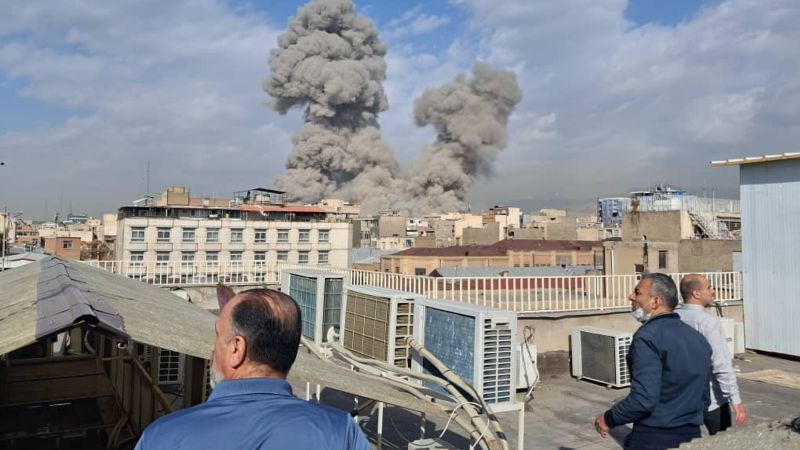
In the immediate aftermath of the alleged strikes and the confirmed death of Ali Khamenei, the situation within Iran was reportedly chaotic. Explosions, air raid sirens, and frenetic media updates characterized the initial hours. State media's confirmation of the Supreme Leader's death came amidst further reports of aerial attacks and a defiant Tehran threatening swift retaliation. This period of intense confusion left many Iranians, both inside the country and abroad, grappling with an existential question: what would this unprecedented turning point mean for Iran and its people?
The suddenness of Khamenei's demise, following decades of his unwavering rule, plunged the nation into a period of profound uncertainty. The succession process, traditionally opaque and carefully managed, now faced the immediate challenge of filling the void left by a figure who had become synonymous with the Islamic Revolution. As the world speculates on who might next ascend to power and the internal factions vie for influence, the memory of Khamenei's demise and the question of his final resting place, of who would ensure that Khamenei enterré became a reality, underscores the finality of an era.
Diaspora's Euphoria: Hopes for a New Dawn
While uncertainty gripped Iran, a starkly different sentiment swept through the Iranian diaspora, particularly in Germany. For many German-Iranians, the news of Khamenei's death, initially feeling like an impossible dream, quickly turned into palpable euphoria. Public demonstrations and spontaneous gatherings erupted in cities like Berlin, Frankfurt, Munich, and Hamburg, as thousands took to the streets not just to protest, but to celebrate a moment they had yearned for for years.
Rusbeh Salmani, a German-Iranian in Hamburg, vividly described the overwhelming sense of happiness and relief. "I have such euphoria in me, I don't even know how many happy feelings I have right now," he shared, linking his joy to the concrete hope of being able to celebrate the Persian New Year (Nowruz) on March 21st together again, free from the shadow of the old regime. Salmani even expressed gratitude towards Israeli Prime Minister Benjamin Netanyahu, believing that a new era had dawned and that the international community, alongside the Iranian people, would not tolerate the rise of another hardline cleric.
This widespread jubilation, however, was often tinged with complex emotions. As journalist and author Gilda Sahebi noted, the speed and force of the events were almost incomprehensible. While many elements suggested a planned operation, the swiftness with which the Supreme Leader, a figure once thought invincible, was reportedly removed, was "impossible to foresee." This mixed sentiment reflects a nation on the cusp of potential transformation, where deep-seated fear suddenly gives way to the exhilarating, yet fragile, promise of change.
Beyond the Burial: Analyzing Iran's Political Crossroads
The alleged assassination of Ali Khamenei, followed by the confirmation of his death, thrust Iran onto a precarious political crossroads. While the immediate focus was on the internal power vacuum, the long-term implications are far-reaching. The core question for many is whether this event will truly usher in a new political landscape or merely lead to a reshuffling of the same authoritarian forces. Voices like Rusbeh Salmani express strong conviction that the people, empowered by adrenaline and a clear vision, will not permit the continuation of the previous regime's policies. He suggests that the international community, particularly Israel, would also oppose such an outcome.
However, other perspectives caution against over-optimism, highlighting the deep-rooted nature of the Islamic Republic's institutions and the powerful factions that would seek to maintain control. The swift succession, if orchestrated by existing power brokers, could simply solidify a new leader who continues Khamenei's legacy. The role of the Revolutionary Guard, the various clerical establishments, and the complex web of political and economic interests will heavily influence the path Iran takes. This period demands a careful examination of internal dynamics, external pressures, and the aspirations of a populace that has long craved fundamental change. The prospect of Khamenei enterré marks not just the end of a life, but potentially the beginning of a profound transformation, the direction of which remains intensely uncertain.